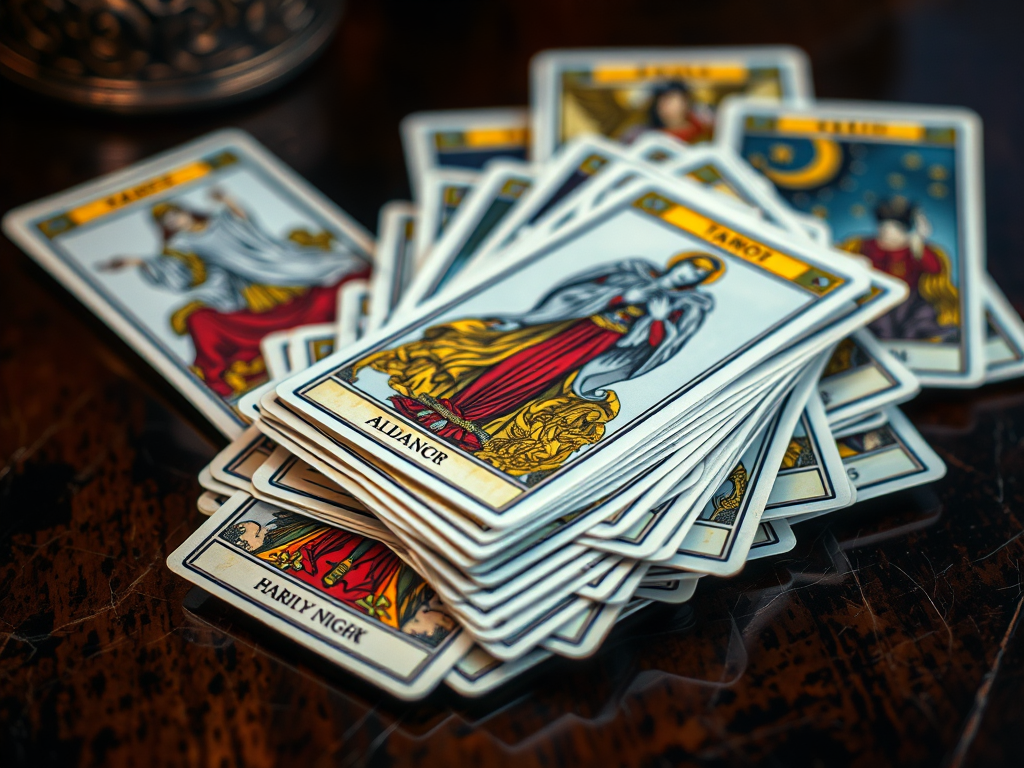
Tarot is more than just a deck of cards- it’s a reflection of the self, a conversation between intuition and the universe. Each shuffle carries energy, each spread tells a story, every card reveals a piece of the puzzle we call life.
Some people approach tarot as a tool for divination, seeking glimpses of the future. Others see it as a guide for self-discovery, using the imagery and symbolism to navigate the present. But at its core, Tarot isn’t about fortune-telling- It’s about connection.
Connection to your intuition, your emotions, and the unseen threads that weave through your experiences.
Reading tarot isn’t about memorizing 78 card meanings or following rigid rules. It’s about learning to trust yourself, recognizing patterns and allowing the cards to speak in a way that resonates with you. Whether you’re just picking up your first deck or looking to deepen your understanding, this guide will walk you through the essentials- then take you beyond them, into the intuitive and symbolic layers that make Tarot a living practice.
Let’s begin.
- Brief History of Tarot
- Misconceptions
- Energy & Intention: Does Tarot Open Portals?
- The Major & Minor Arcana: The Two Sides of Tarot
- Getting Started: How to Read Tarot
- Unlocking Numbers: The Hidden Code in Tarot
- Opening a Tarot Reading: Setting the Energy with Intention
- Awareness & Boundaries
- Bonus Insight: Reversals
- Final Thoughts: Trust Yourself & Your Journey
- Additional Resources
Brief History of Tarot
Where Did Tarot Come From?
Tarot’s origins are often surrounded by mystery and speculation, but it didn’t start as a mystical tool for divination. The earliest known tarot decks date back to the 15th century in Europe, used primarily for card games rather than fortune-telling. It wasn’t until the 18th and 19th centuries that Tarot became associated with esoteric practices, influenced by mystics who saw deeper symbolism in the cards. Over time, Tarot evolved into a tool for self-reflection, spiritual exploration, and intuitive guidance.
Misconceptions
Is Tarot Evil? Debunking the Fear
One of the biggest misconceptions about Tarot is that it’s tied to dark forces or evil intent. This belief stems from religious fears, Hollywood dramatizations, and misunderstanding of the symbolism. Cards like Death, The Devil and The Tower often fuel these fears, but their meanings are rarely as ominous as they seem.
♡ Death (XIII) doesn’t predict literal death- It represents transformation, endings and new beginnings
♡ The Devil (XV) isn’t about demonic forces but rather unhealthy attachments, addictions, or self-imposed limitations.
♡ The Tower (XVI) symbolizes sudden change or revelations, not doom or destruction.
Tarot itself doesn’t summon spirits or control fate- it simply reflects what is already within you. The cards act as mirrors, helping you understand your own emotions, thoughts, and choices. It’s a tool of empowerment, not fear.
Another common misconception? That tarot readings are unchangeable prophecies. If a reading suggests a challenge ahead, it’s not a fixed fate- it’s a heads-up, giving you the opportunity to navigate it with awareness. The cards don’t dictate your life; they reflect your current path and offer guidance on how to shape it.
Myth vs. Reality: The “Doom Card” Trope
If you’ve ever seen a Tarot reading in a movie, you probably know the scene: The mysterious fortune teller flips over the Death card, dramatic music plays, and the main character gasps in horror- clearly, they’re doomed.
Reality check? That’s not how tarot works.
In an actual reading, pulling the Death card is more likely to mean a major life transformation- like leaving a job, moving to a new place, or shedding an old mindset. It’s the metaphorical “death” of something outdated, making room for new growth. In fact, many Tarot readers celebrate this card because it signifies rebirth and positive change.
So next time you see a Tarot reading in a movie predicting someone’s demise, just remember: Hollywood loves the drama. Tarot loves the truth.
Myth vs. Reality: Do You Have to Be Gifted Your First Deck?
If you’ve ever been curious about Tarot, you might have heard this one: You can’t buy your first deck- it has to be gifted to you!
Where did this myth come from? No one really knows, but it likely stems from old superstitions that suggested Tarot should be “earned” rather than casually picked up. Some say a gifted deck carries special energy, while others believe it prevents back luck.
Reality check? You can absolutely buy your own Tarot deck. In fact, choosing your first deck is an important step in developing a personal connection with Tarot. When you pick out a deck that resonates with you- whether it’s based on the artwork, the symbolism, or just a gut feeling- you’re already tapping into your intuition. That’s way more powerful than waiting around for someone to hand you a random deck.
That said, receiving a deck as a gift can be meaningful, as if it found its way to you. If you want to embrace that tradition, go for it!
But if you feel called to Tarot, don’t let an old superstition hold you back. The best Tarot deck is the one that speaks to you- whether it was gifted, thrifted, or bought with your own two hands.
Energy & Intention: Does Tarot Open Portals?
One of the biggest fears people have about Tarot is the idea that it invites spirits or opens portals between realms. Some believe that reading Tarot without protection could attract unwanted energies, while others think the cards themselves hold mystical power. So, what’s the truth?
Tarot is a Tool- Energy Comes from You
Tarot, by itself, is neutral. It’s a deck of illustrated cards, no different than a book of symbols or a mirror reflecting what’s already there. The power of Tarot comes from the person using it- your energy, your intuition, and your intention.
Does Tarot open portals? Not inherently. But like any spiritual practice- meditation, Reiki, pendulum work- Tarot does engage with energy and subconscious wisdom. When you read Tarot, you’re not summoning spirits. You’re tuning into the energy around you, whether that’s personal, collective, or divine guidance (if you work with it that way).
Why Do Some People Call on Spirits When Reading Tarot?
Some readers may call upon different sprits for a few different reasons. Some include:
♡ Seeking Spiritual Guidance: Some readers believe that Tarot can be a channel for messages from spirit guides, angels, ancestors, or divine beings. By inviting these energies in, they feel they are receiving insight beyond their own intuition.
♡ Protection & Energetic Boundaries: For those who see Tarot as a form of spiritual work, calling on a protective presence (like Archangel Michael) is a way to set boundaries and ensure they are only working with benevolent energy.
♡ Aligning with a Personal Spiritual Practice: Many Tarot readers come from different spiritual backgrounds- some blend tarot with their religious beliefs, while others use it in their own unique way. (Christian readers may call on God for guidance, Wiccan or Pagan readers may call on deities such as Athena, or some practitioners work with ancestor spirits.)
♡ Raising the Energy of the Reading: Even for those who don’t see Tarot as a direct spirit-communication tool, calling in higher energies can help set the tone for the reading. Saying a small invocation, prayer, or affirmation can shift the mindset from everyday thoughts to a more focused and intuitive state.
Do you need to call on spirits?
No, not at all! Tarot is flexible- some people prefer to work only with their own intuition and don’t feel the need to invite any external energy.
If you feel drawn to incorporating this into your practice, you could try experimenting with different approaches- maybe calling on your higher self instead of external beings.
Why Do People Cleanse Their Decks?
If Tarot doesn’t inherently open a portal, why do so many people sage, knock or cleanse their decks? It comes down to energy and intention rather than fear.
♡ Residual Energy: Just like a room can feel heavy after an argument, Tarot decks can carry energy from past readings. Cleansing is a way to reset them.
♡ Alignment: Cleaning a deck aligns it with your energy, so your readings are clearer and more personal.
♡ Spiritual Protection: If someone calls upon higher spirits for a reading and connects them to higher energies, cleansing helps them set boundaries and avoid interference from lower vibrations.
Does Tarot Attract Unwanted Energy?
Not unless you invite it. Tarot is not a Ouija Board. It doesn’t automatically open a gateway to spirits, nor does it call anything in unless that’s your intention.
That said, fear is a powerful thing. If someone approaches Tarot with anxiety about spirits or negative energy, they might unconsciously manifest that experience. That’s why many readers say a quick affirmation, prayer, or grounding ritual before reading- not because that cards are dangerous, but because setting clear energetic boundaries makes for a better reading experience.
The Most Important Truth: Trust Your Own Experience
Over time, many of us absorb other people’s fears and beliefs about Tarot, and it’s easy to lose sight of what we actually believe. I know I did. My practice was even affected by other people and their style of reading.
The best way to approach Tarot is with an open but discerning mind. Ask yourself:
♡ What do I personally feel when I use Tarot?
♡ Have I ever had an experience that suggests Tarot is dangerous, or have I only heard that from others?
♡ Do I feel more empowered or more fearful when I read?
At the end of the day, Tarot is a mirror for the soul. It reflects what’s within you- it doesn’t control you, summon forces beyond your will, or dictate your future. If you approach it with clarity and respect, it will always serve as a tool for growth, guidance and connection.
Now that we’ve paved the path to understanding what we’re working with, let’s dive in.
The Major & Minor Arcana: The Two Sides of Tarot
Before getting into reading, let’s take a look into how a deck is structured. If it’s your first time looking at a deck, you might be thinking what the hell is going on, I know I did.
Don’t worry, you don’t need to memorize everything right now! As you work with your deck, these patterns will start to feel more natural.
A Tarot deck is made up of 78 cards, split into two main sections: the Major Arcana and the Minor Arcana. Each serves a different purpose in reading and offers unique insights into your journey.
The Major Arcana: Life’s Big Lessons
The Major Arcana consists of 22 cards (0-21), starting with The Fool (0) and ending with The World (21).
Think of the Major Arcana as the main plot points in the story of life. When a Major Arcana card appears in a reading, it often signals a powerful shift, an important decision, or a lesson you’re meant to learn.
Some well-known Major Arcana cards include:
♡ The Fool (0): New beginnings, stepping into the unknown
♡ The Lovers (VI): Love, harmony, or big choices
♡ Death (XIII): Transformation, endings leading to new beginnings
♡ The Tower (XVI): Sudden change, breaking down to rebuild stronger
♡ The Word (XXI): Completion, fulfillment, and stepping into a new phase
Together, the Major Arcana tells a symbolic journey known as The Fool’s Journey– a path of growth, discovery, and enlightenment.
The Minor Arcana: Everyday Experiences
The Minor Arcana consists of 56 cards, divided into four suits:
♡ Cups (Emotions & Relationships)
♡ Pentacles (Material World & Career)
♡ Swords (Thoughts & Communication)
♡ Wands (Passion & Action)
Each suit has 14 cards: Ace through Ten (representing life’s cycles) and four Court Cards (Page, Knight, Queen, and King), which can represent personalities, energies, or phases of personal growth.
♡ Page: Childlike, playful, and curious energy. Represents new beginnings, fresh perspectives, and eagerness to learn.
♡ Knight: Ambitious, action-oriented, and determined. Knights are driven by their suit’s element, sometimes to the point of impulsiveness and overconfidence. They represent movement, pursuit, and actively chasing goals.
♡ Queen: Gental, nurturing and intuitive. Embodies emotional intelligence, wisdom, and mastery of their suit’s energy in a compassionate way.
♡ King: Strong, authoritative, and structured. Kings embody leadership and mastery of their suit’s energy in a controlled and responsible way. They represent stability, wisdom and the ability to take decisive action.
The Minor Arcana reflects the day-to-day events, challenges, and decisions in your life. When a Minor Arcana card appears in a reading, it typically speaks to situations that are temporary, flexible, or within your control.
Think of it like this:
♡ Major Arcana = The big chapters in your life’s book
♡ Minor Arcana = The details and moments that shape those chapters
Both are equally important- some readings are full of Major Arcana, signaling deep transformation, while others are packed with Minor Arcana, showing day-to-day challenges and choices.
By understanding both, you can start to see not just what’s happening in your life, but why it’s happening- and how you can navigate it with wisdom.
Getting Started: How to Read Tarot
When you first start reading Tarot, it can be overwhelming. There’s a lot of information and if you don’t know someone else that reads, it can make it harder. I know because I was there. I taught myself everything from scratch. So, let’s start with the basics.
The first thing you want to do is choose your first deck- something that resonates with you. Personally, I have always been drawn to the classic Rider-Waite Tarot deck. I felt like it was a great starter deck and there was a lot of easily understandable information about it- but whatever deck you choose to start with is your choice.
After getting a deck, you’ll want to shuffle it around, cleanse it and spend time looking at the cards. Notice what first impressions you get. By spending time with your deck, you put your energy into it- you make it yours.
To start reading, I would recommend doing one card pulls, or even three-card spreads. (There are links at the end of this post for some good, beginner spreads.) By starting out with smaller spreads, you get to know your cards better and they get to know you. It’s taking a bite of the elephant rather than trying to eat it whole.
Now, I know when your pull your first card, or even while you’re simply looking at the cards for the first time, you have the thought what does this even mean? and the feeling of being overwhelmed sets in. Our natural response is probably to look up the card and its meaning.
But I strongly encourage you not to do that. Take a moment, breathe, then look at the card- look into it. Notice its imagery, the first elements that stood out to you. The symbols, the colors, the expressions- everything about the card.
You can even write down your first impressions. This helps you build a personal relationship with the cards rather than relying on someone else’s interpretation first. Your intuition is just as important as the traditional meanings.
Then, notice what it is you’re feeling while looking at the card- not your feelings, but the feelings you received by looking at the card.
After you’ve done all of that, you can look up the definition.
Reading Tarot isn’t about memorizing the definition of each card- I know because I did. I can tell you the textbook definition of each 78 cards in the Tarot deck. I can also tell you that has been my biggest limitation. Memorizing the definitions makes reading very rigid- and it’s not meant to be.
The real magic of Tarot is in how the cards interact with each other. No card exists in isolation- together, they create a story.
Let’s look at an example.
We’re doing a three-card spread, your first card is The Devil, your second card is Nine of Wands, and the third card is the King of Cups.
(It’s best to look at the images below on a desktop, rather than a cellphone)
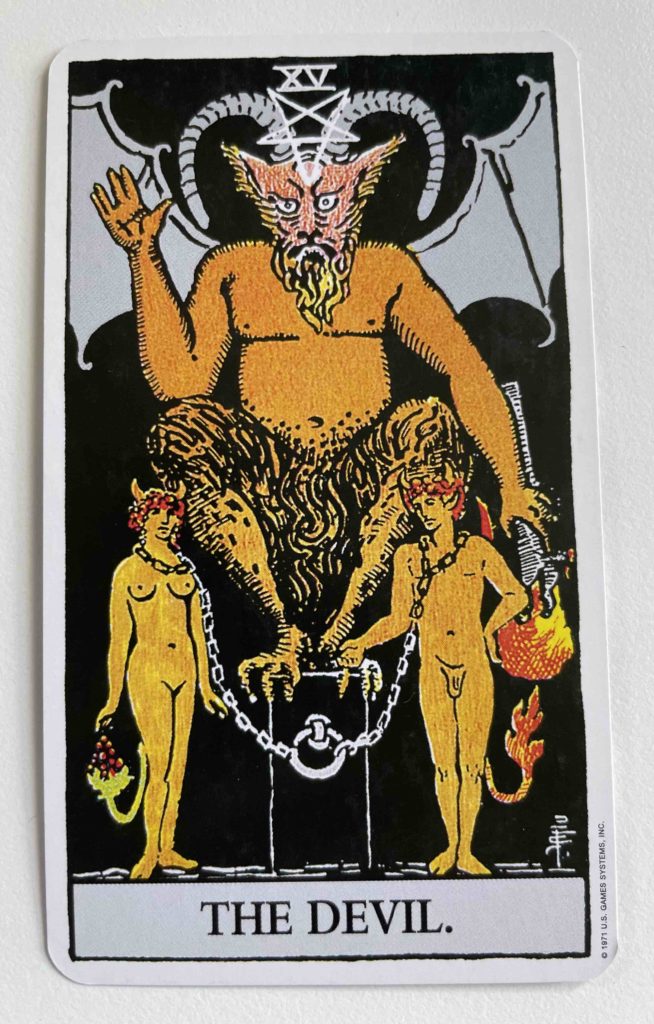
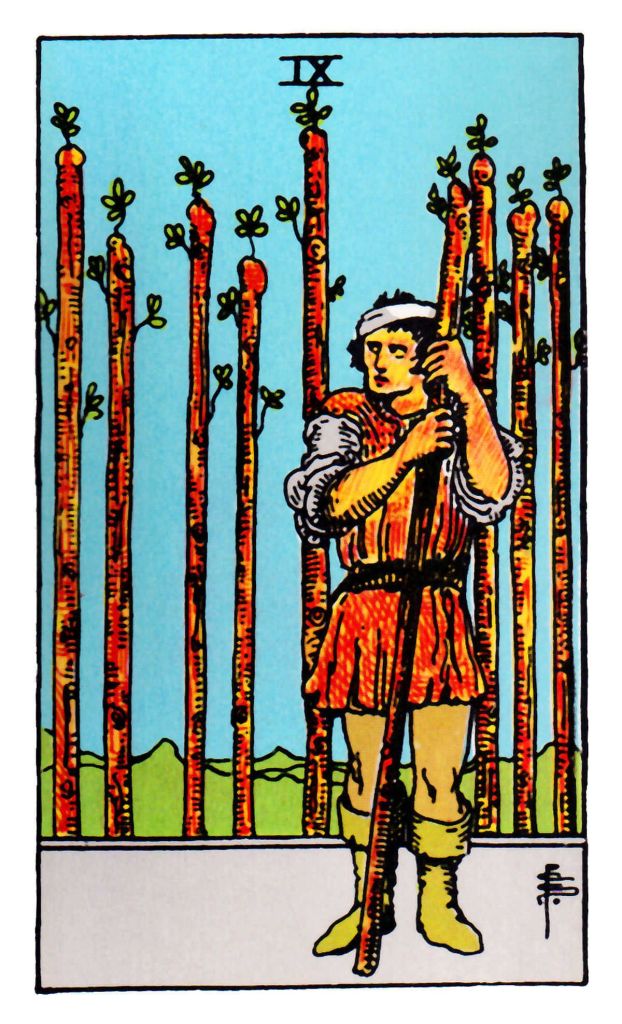
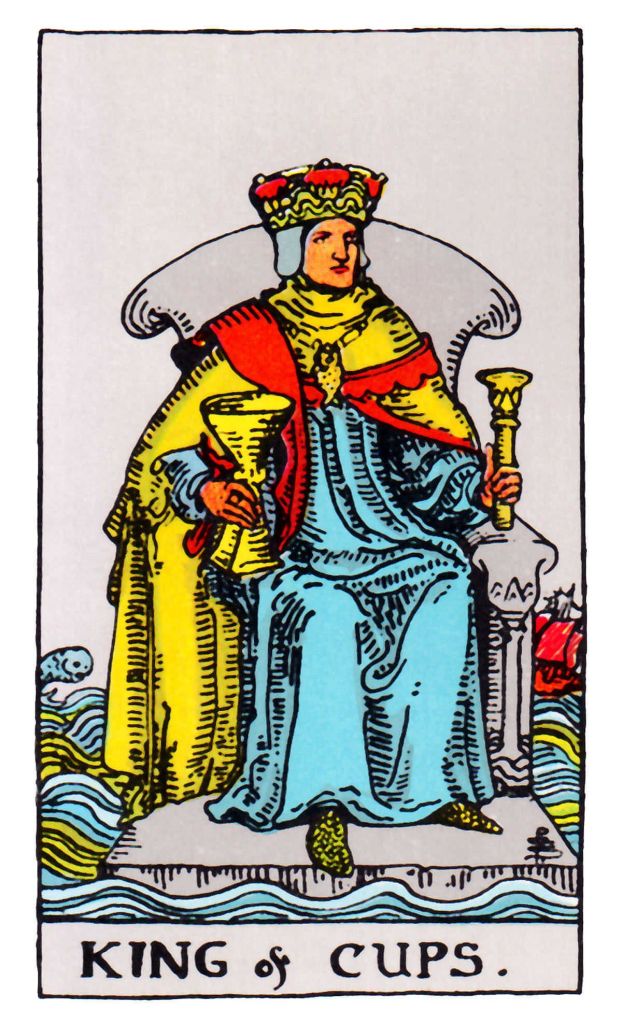
A basic interpretation of this story is that you were experiencing a toxic situation- possibly a bad relationship. It didn’t end well; you are exhausted from this experience, but you got out, and you are still standing. A part of you is still looking back at it- it may have happened recently and you’re still processing it. Maybe you’re heartbroken or have a lesson that’s being learned. But deep down, you know it’s time to move forward. And when you do, you won’t look back. You’ll be stronger than before. Even if that toxic situation resurfaces, you’ll be steady, grounded, and confident to walk away.
Note:
Just because you’ve done the spread, doesn’t mean you have to stop. If you feel called to, you could ask clarifying questions- whether with tarot or oracle cards.
For this example, you could ask:
♡ What force was the root of the toxic situation?
♡ What needs to be focused on to step into the king energy?
♡ What fears might be lingering that could hinder this healing?
Keep in mind, though, that you don’t want to ask too many questions. Listen to your intuition- and feel when it’s time to stop.
Let’s say you asked, “What force was the root of the toxic situation?” And you pulled the Two of Cups. That would suggest this was, in fact, a relationship-centered reading- one with unhealthy dynamics, connection, or codependency at its core.
Let’s look at the same cards but in different positions in the spread. This time we have the King of Cups first, then the Nine of Wands, and then The Devil.
In this spread, the basic interpretation could be that you were in a really confident mindset. Feeling powerful and abundant, but then something happened and knocked you down pretty hard, you’re still standing but you’re looking back at who you used to be and how you used to feel. With constantly looking backwards and sinking into your hurt emotions, you’ll fall into toxic habits, possibly something to help you “cope.” It’s important to keep in mind we can look at the past for lessons and wisdom but holding it so tightly we forget that a future version of ourselves can exist. The future holds endless possibilities, even after we get knocked down.
Notice how the exact same three cards told two completely different stories just by shifting their positions. This is why Tarot isn’t about individual card meanings- it’s about how they interact with each other in the moment.
Key things to notice in the cards:
♡ The Colors
♡ The People- Which way they’re looking, their expressions, how their standing/ sitting
♡ Elements around the people in their setting
♡ Subtle symbolism
What did you notice in the cards first?
Tarot isn’t just about what the cards say- it’s about what they show you. The more you practice seeing beyond the definitions, the more natural your readings will become.
Maybe you even noticed the number at the top of the card and felt a draw to the numerology. Let’s dive into the importance of the hidden code behind the numbers.
Unlocking Numbers: The Hidden Code in Tarot
♡ Why Numerology Matters in Tarot: Numbers add layers of meaning and can help with intuitive reading by adding another piece to the puzzle.
♡ Number Meanings Overview:
❥ 1 (Beginnings, independence, potential) – Ace of any suit
❥ 2 (Balance, duality, choices) – Two of cups, two of swords, etc.
❥ 3 (Creativity, growth, expansion) – Three of pentacles, three of wands, etc.
❥ 4 (Stability, structure, foundation)
❥ 5 (Conflict, change, challenge)
❥ 6 (Harmony, healing, responsibility)
❥ 7 (Spirituality, reflection, mystery)
❥ 8 (Power, movement, cycles)
❥ 9 (Completion, fulfillment, wisdom)
❥ 10 (Endings and new beginnings)
If multiple cards with the same number appear, it can indicate a theme (e.g. multiple 5s suggest instability or change).
We know the history; we know the cards structure; we know the basics; we know the numerology. I’d say we’re ready to open to a full reading.
Opening a Tarot Reading: Setting the Energy with Intention
Before you start reading Tarot, it’s helpful to set the energy of the space– whether you’re reading for yourself or someone else. This doesn’t have to involve calling on spirits, but it can.
Ways to Open a Tarot Reading
♡ Ground Yourself: Take a few deep breaths, center your energy, and focus on the present moment. You can visualize roots growing from your feet into the earth or imagine a protective light surrounding you.
♡ Creating a Sacred Space: Light a candle, burn incense, or use a crystal to set a clear and intentional space. This isn’t about superstition- it’s about creating an environment where you can feel open and focused.
♡ Stating an Intention: Before pulling cards, say (or think) something like:
“I ask for clarity, truth, and insight for my highest good.” or “May this reading bring wisdom and understanding, free from fear or interference.”
♡ Call on Spiritual Guidance: Some readers choose to invite higher energies, such as:
❥ Their higher self or intuition
❥ Spirit guides or ancestors
❥ Angels or deities
♡ Cleansing the Deck & Space: Some readers knock on their deck, shuffle with intention or use smoke cleansing (sage, palo santo, or incense) to reset the energy before a reading.
Before doing a reading it’s also important to be in-tune with your awareness and boundaries, especially when calling upon higher energies.
Awareness & Boundaries
While Tarot itself doesn’t automatically invite spirits, your intention matters. If you choose to call on any energy outside of yourself, it’s crucial to stay aware and set strong energetic boundaries.
♡ Be Clear About Who You’re Inviting: Instead of saying, “Any spirits who want to come through,” be intestinal. For example:
❥ “I invite only beings of light, love, and wisdom who align with my highest good.”
❥ “I call on my spirit guides who work in truth and integrity.”
♡ Trust Your Intuition: If anything feels “off” during a reading (confusing messages, anxious energy, or a gut feeling that something isn’t right), stop, ground yourself, and cleanse your space. There’s nothing wrong stopping mid-reading if something doesn’t feel right. Your intuition is your best tool for discernment.
♡ Close the Reading Properly: Just as you open a reading with intention, closing it is equally important so there’s no open, lingering energy.
❥ You can say “Thank you for the guidance received. This session is now closed.”
❥ Shuffle the cards, blow out candles, or visualize any lingering energy being released.
♡ Don’t Let Fear Control You: If you approach Tarot with fear, you might unintentionally create an anxious experience. Instead, approach it with trust and awareness. Fear gives power to uncertainty, while clarity and confidence strengthen your connection.
At the end of the day, Tarot is your practice. You don’t have to call on spirits, but if you do, set boundaries, trust yourself, and always prioritize your own energetic well-being. You’re in control and you’re safe and always protected. There’s nothing to be scared or anxious about when you do a reading.
Keep your mind open and lead with respect, confidence, light and love.
Bonus Insight: Reversals
Optional Advanced Tip
What are Reversals?
A reversal card is simply when the card is upside down in a spread. Some readers choose to interpret these differently- often as a signal that something needs a little extra attention.
However, not everyone reads reversals- and that’s totally okay. Reversals aren’t inherently bad or negative. Instead, they often point to inner challenges, delays, or hidden aspects of a situation. They invite reflection rather than alarm.
Here are a few common interpretations of reversed cards:
♡ Blocked energy: Something is being resisted or not flowing freely. (e.g. Ace of Cups)
♡ Internal focus: The message applies inwardly rather than externally. (e.g. Two of Wands)
♡ Delays or hesitations: Things may be moving slowly or are out of sync. (e.g. Wheel of Fortune, Knight of Cups)
♡ Shadow aspects: Traits or themes that are distorted, suppressed, or exaggerated. (e.g. The Tower, Four of Pentacles)
If you want to start reading reversals, try this:
♡ Set the intention to read reversals only when they feel significant.
♡ Pay attention to how the reversed card makes you feel- sometimes your intuition will do the heavy lifting.
♡ While learning, keep your deck upright and flip cards deliberately until you’re more comfortable.
Remember: Reading reversals is a choice, not a requirement. The wisdom of tarot shines whether a card is upright, reversed or somewhere in between.
Final Thoughts: Trust Yourself & Your Journey
Tarot isn’t about knowing all the answers- it’s about asking the right questions. It’s a tool for intuition, self-reflection, and personal growth, not something to fear or overcomplicate.
When you first start reading, it’s easy to feel overwhelmed. You might worry about getting it “right” or second-guessing your interpretations. But remember this: There’s no single right way to read Tarot- only the way that resonates with you.
The more you practice, the more natural it will feel. Over time, you’ll start noticing patterns, trusting your gut, and weaving together messages without needing to check a guidebook every time. Tarot isn’t about memorization- it’s about connection. The cards are here to guide you, not control you.
So, take your time, explore, and trust yourself. The more you lean into your intuition, the more Tarot will become a powerful, personal tool in your life.
Additional Resources
If you ever need a reference along the way, a great resource, I recommend, for card meanings, card spreads, and more tarot information is Biddy Tarot.
Thank you all for being here and sharing this journey with me. I hope you found this post to be helpful and insightful. I wish you all the best in your Tarot adventures.
I would love to hear from you with any questions or thoughts- drop a comment or reach out!
Blessings!
 Divine Events
Leave a comment