
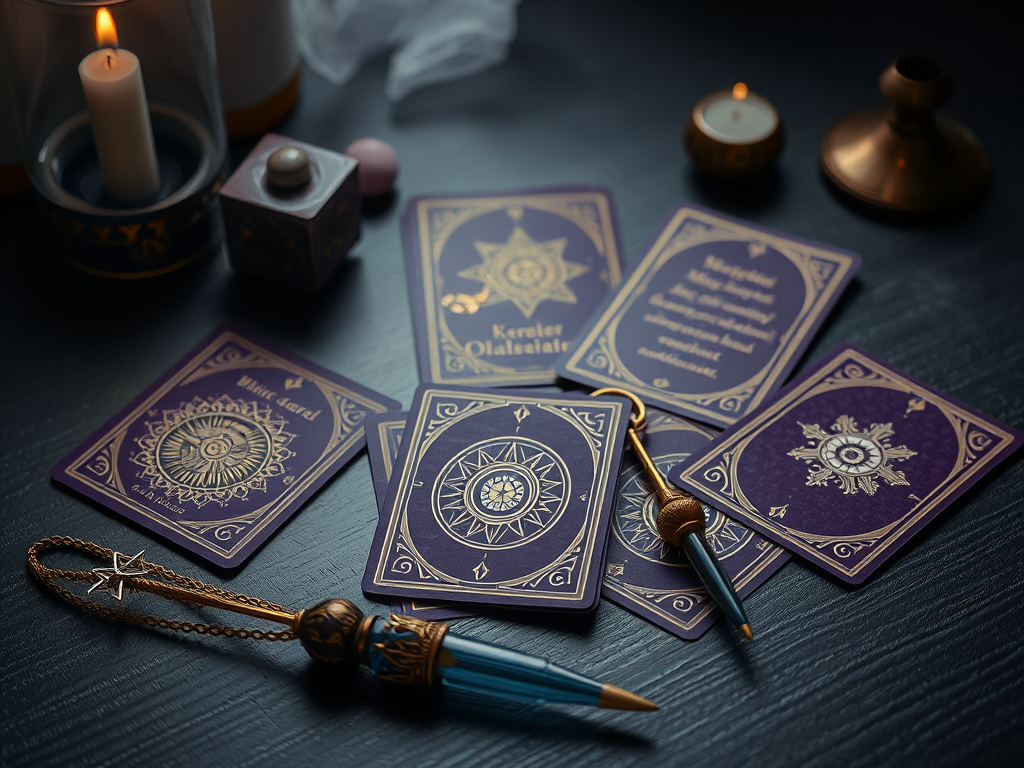
We are all seeking something- answers, direction, reassurance, or simply a deeper connection to ourselves.
Divination isn’t about predicting the future in some mystical, unreachable way.
It’s about tuning in.
It’s about asking questions and listening- really listening- for the quiet truth that lives within us.
We often look outside of ourselves for clarity, but what if the most powerful answers come from within?
What if the tools we use- cards, pendulums, symbols, even palm reading- aren’t giving us anything new, but simply helping us remember what we already know?
Divination is less about fortune-telling and more about forming a relationship with your intuition.
The tools are just that- tools. Mirrors for your inner knowing. Gateways to deeper awareness.
In this blog, we’ll explore some of the most accessible and empowering forms of divination: Oracle cards, pendulums, body-based intuition, palm reading, and more.
You don’t need to be an expert or carry a spiritual title to connect with these practices. All you need is curiosity and a willingness to trust yourself a little more each time.
Let’s dive in.
- Oracle Cards
- Other Divination Decks
- Pendulums
- Body Testing (Muscle Testing)
- Palm Reading (Palmistry)
- Other Tools of Divination
- Final Reflections
Oracle Cards
Messages for the Moment
History of Oracle
Unlike tarot- which dates back to the 15th century- oracle cards don’t have a single point of origin. Throughout history, people have used various forms of divination- runes, bones, symbols, and sacred texts- to seek guidance. But the modern oracle deck as we know it became popular in the 19th and 20th centuries with the rise of spiritualism and metaphysical exploration.
One of the earliest known examples is the Lenormand deck, named after French fortune-teller Marie Anne Lenormand. Over time, oracle cards evolved into more intuitive and emotionally focused tools, especially in the New Age movement of the 1980s and beyond.
Today oracle decks come in countless styles and themes- designed less for fortune-telling and more for personal reflection, healing, and spiritual connection.
Tarot vs. Oracle Cards
Oracle cards are one of the most approachable and customizable tools in divination. Unlike tarot, which follows a traditional 78-card structure with specific suits and archetypes, oracle desks are free-form. They can be themed around anything- affirmations, moon phases, goddesses, animals, emotions, chakras, or even pop culture.
You could think of tarot as the pages of a book- detailed, structured, and full of narrative.
Oracle, on the other hand, is like the chapter title. It gives you the essence of what’s going on- a theme to reflect on, or the energy to carry with you.
Because there are no set rules or systems, anyone can create an oracle deck. Some people even make their own using index cards or slips of paper with handwritten messages, symbols, or affirmations. The power isn’t in the design- it’s in the intention.
Many people prefer oracle over tarot because it feels gentler- offering softer guidance.
Tarot can sometimes carry stigma- seen as mysterious, intense or even intimidating, especially with the misunderstandings around “negative” energy.
Oracle, by contrast, often feels more supportive and emotionally spacious. It’s less about dissecting a situation and more about offering insight, encouragement, or clarity.
Of course, many readers prefer to use both- letting the oracle card(s) support or enhance the tarot reading.
How you use them is completely up to you.
How to Use Oracle Cards
There’s no “right” way to read oracle cards- only what feels right to you.
When you pull a card, pay attention to how the card makes you feel.
Does the imagery or colors speak to you?
What did you notice first?
After those initial impressions, take a moment to look at the message or meaning of the card. You might see words like trust, alignment, adjustment, or intuition. Some decks offer phrases like Divine Timing, or Universal Love.
How do these words relate to your current situation or question?
Do they affirm what you’ve been feeling?
Do they challenge you to shift your perspective?
If you’re pulling multiple cards, ask:
What story are these cards telling together?
Is there a theme emerging? A conversation unfolding?
Here are a few common methods to try:
♡ Single Card Pull: Ask a question or simply request a message for the day, then pull one card and sit with what it brings up.
♡ Three Card Spread: Try a Past / Present/ Future layout or Situation / Challenge / Guidance
♡ Clarifying Tarot: Pull an oracle card after reading tarot to get a broader message or emotional theme.
Example: Your tarot spread reveals emotional hardship. You ask, “What’s a major contributing factor buried in the subconscious?” You pull an oracle card full of bright colors and symbols of love. You might then interpret the tarot story as one of heartbreak or loss of love.
♡ Journaling Prompts: Use the message on a card as a springboard for reflection or creative writing.
Whatever method you choose, remember: The message might not always be literal. It could come through a symbol, a sensation, or a memory.
Trust your first impressions.
They often hold the clearest truth.
Other Divination Decks
Exploring Beyond Tarot and Oracle
While tarot and oracle cards are the most well-known card-based tools, they’re not the only ones. There are many decks out there that offer unique perspectives and styles of insight. Here are a couple of other decks you might encounter on your journey:
♡ Lenormand: A 36-card system rooted in European cartomancy. Unlike Tarot, Lenormand is focused on practical messages and literal symbols. Cards are read in combinations to form a “sentence,” giving clear insights about events, people, and timing.
This deck is traditionally read in groups of two or more cards. A popular beginner layout is a 3-card spread. The real magic of the Lenormand lies in how the symbols interact.
Example:
❥ Woman + Letter + Sun = A positive message is coming from or about a woman.
❥ Book + Snake = A hidden deception.
♡ Affirmation Decks: These decks are less about divination and more about emotional or spiritual support. Each card typically offers a positive message, mantra, or reminder. They’re great for daily inspiration, mindset shifts, or journaling prompts.
These are almost always used for one-card pulls. You might pull a card in the morning as a daily affirmation or whenever you need a boost. They’re simple, quick, and uplifting.
♡ Archetype or Symbol Decks: Some decks are based on specific themes, like Jungian archetypes, animal spirits, plant medicine, or chakras. These can be used for deeper introspection and self-discovery, and energetic connection with the world around you.
They’re great for single card pulls or more layered spreads. A one-card draw is perfect when you’re seeking insight into the energy you’re embodying, a lesson you’re integrating, or something to reflect on.
You don’t need to collect them all- just the ones that speak to you.
Follow your curiosity, and trust what resonates.
Pendulums
Simple Swings, Deep Truths
A pendulum is one of the simplest and most versatile divination tools- and one of the most fascinating. At its core, a pendulum is just a weighted object, often a crystal, suspended from a chain or string. But in the hands of a curious seeker, it becomes a tool for intuitive clarity, yes/no guidance, and subtle energy detention.
How It Works
The idea behind a pendulum divination is that your subconscious mind- and your energy field- already knows the answer. When you hold a pendulum still and ask a question, your body sends tiny, unconscious muscle movements (called ideomotor responses) through your hand, causing the pendulum to swing in a specific direction.
It may look magical, but it’s really a form of tapping into your own inner wisdom.
Common Misconceptions
Like tarot, pendulums are sometimes misunderstood. People may assume they’re “dangerous,” that they invite negative spirits, or that they’re too advanced for beginners. In truth, pendulums aren’t inherently mystical or risky- they’re simply tools for communication. Their power comes from your intention and the energy you bring to the practice.
When used with clarity, respect, and groundedness, a pendulum can be a deeply healing and empowering ally- not something to fear.
Ask yourself what your thoughts and feelings are. Are they yours? Or are they coming from someone else?
Choosing or Making a Pendulum
Pendulums can be made of crystal, wood, metal, or even a favorite pendant on a string. What matters most is your connection to it. Some people choose pendulums based on crystal properties (like rose quartz for love or amethyst for spiritual clarity), but you can also simply go with what feels good in your hand.
Getting Started: Programming Your Pendulum
Before using a pendulum, it’s helpful to establish what “yes,” “no,” and “maybe” look like for you.
Hold your pendulum still and say:
“Show me yes.”
Wait for a moment. It may swing forward and back, side to side or in a circle.
Then ask,
“Show me no,” and observe again.
You can also ask it to show you “maybe” or “I don’t know.”
These directions will stay fairly consistent for you, but you can recalibrate any time- especially if your energy shifts or you’re using a new pendulum.
Using the Pendulum
Once you’ve established your directions, you can begin asking questions. Pendulums are best for clear yes/no or simple option-based questions.
Examples:
❥ Is this the right time to have that conversation?
❥ Is my energy grounded right now?
❥ Would this job opportunity be aligned for me?
You can also use pendulums over charts or grids to receive more detailed answers, or over the body to check for energetic imbalances in the chakras.
Connecting with Spirit Guides or Higher Self
Some people use pendulums to connect with their Spirit team- guides, ancestors, angels- or their Higher Self. To do this, it’s important to create a clear and protected energetic space. Start with a simple intention, like:
“I call on my highest guides of love and light. May only clear, true, and aligned guidance come through.”
Then you can ask:
❥ Am I connected to my Spirit team right now?
❥ Is this message from my Higher Self?
❥ Is this guidance in alignment with my path?
Keep in mind, this is a conversation- not a command. Stay open, grounded and discerning. If something feels “off,” trust that and pause.
Tips for Accuracy
♡ Clear your energy before beginning (deep breaths, meditation, or hold your pendulum over selenite or smoke.)
♡ Be neutral and open to the answer- not attached to a specific outcome.
♡ Phrase questions clearly and specifically.
♡ Avoid repeating questions out of frustration- trust the first answer, and revisit later if needed.
Cleansing & Storing Your Pendulum
Just like any energetic tool, it’s important to keep your pendulum clear and aligned.
If pendulums don’t inherently welcome negative energy or unwanted spirits, why do we cleanse our tools?
It comes down to energy and intention rather than fear.
♡ Residual Energy: Just like a room can feel heavy after an argument, pendulums can carry energy from past uses. Cleansing is a way to reset them.
♡ Alignment: Cleaning a pendulum aligns it with your energy, so your sessions are clearer.
♡ Spiritual Protection: If someone calls upon higher spirits for a session and connects them to higher energies, cleansing helps them set boundaries and avoid interference from lower vibrations.
You can cleanse it by:
♡ Placing it on or near a cleansing crystal (like selenite or clear quartz)
♡ Passing it through herbal smoke (sage, palo santo, mugwort, etc.)
♡ Leaving is under moonlight or sunlight for a few hours
♡ Holding it in your hands and setting a clear intention to release any stagnant energy.
When you’re not using your pendulum, store it in a small pouch, box, or on an altar- somewhere it feels protected and energetically safe. Treat it with care and respect as you would any sacred tool.
Trust the Process
Working with a pendulum is a practice in trust- not just in the tool, but in yourself.
It’s not about having all the answers- it’s about deepening your connection to your intuition, your higher self, and the loving energies that guide you.
Know that you are always guided and protected. Be aware of your own fears, and choose to act from love.
Approach the pendulum with curiosity, respect, and openness. Let your intention be clear, your energy grounded and your heart receptive.
This is not about perfection.
It’s about connection.
Let your practice be sacred. Let it be true. And most of all- let it be yours.
Body Testing (Muscle Testing)
Your Inner Compass
Your Body is always communicating with you. Long before cards, pendulums, or rituals, people relied on their bodies- gut feelings, subtle shifts, and instinctive responses- to guide them.
Body-based intuition is exactly that: tuning into your physical self to receive answers. It’s one of the simplest forms of divination because the only tool you need… is you.
Muscle Testing/ Sway Testing
One popular method is called muscle testing or sway testing. It’s often used in holistic health or energy work, but it’s also a powerful tool for personal guidance.
Here how it works:
1. Stand tall with your feet hip-width apart, arms relaxed at your sides.
2. Close your eyes and take a few grounding breaths.
3. Set the intention to connect with your body’s truth. You can say, “Body, show me yes,” and wait (much like a pendulum).
You might feel a gentle sway forward.
4. Then ask, “Body, show me no.”
You may feel a subtle pull backward.
Everyone’s response may be slightly different- some sway more noticeably, others feel a soft internal shift. The key is consistency.
Once you know what your “yes” and “no” feel like, you can begin asking simple questions:
❥ Is it aligned for me to attend this event?
❥ Would this crystal support my energy today?
Tips for Clear Readings
♡ Be hydrated! (Dehydration can throw off the body’s signals)
♡ Stay grounded and neutral- not emotionally attached to the outcome
♡ Keep your knees soft and relaxed, not locked
♡ Try asking a known “yes” or “no” question first to calibrate (like: “Is my name _______?)
Beyond Yes or No
Your body also speaks through gut feelings, physical tension, tingling sensations, warmth, and more. Start noticing what happens when you’re making decisions- do you feel expansive or contracted? Does your chest open or tighten? Do you feel energized or drained?
This practice is about remembering that your body is wise. It stores memory, emotion and deep knowing. By learning to listen to it, you’re reconnecting with one of the most direct and natural forms of guidance available to you.
It’s also important to recognize when your emotions may be affecting your natural knowing. Strong feelings- like fear, excitement, or anxiety- can skew the results of the body testing. That’s why staying neutral is key. Before asking a question, take a moment to breathe, ground, and center yourself. The clearer your energy, the clearer your answer.
Myth: “It’s not spiritual enough”
Because body-based intuition doesn’t look mystical or ceremonial, some people dismiss it as “too simple” or not spiritual. But your body is a sacred tool. It’s your Earth’s suit, your antenna, your intuitive vessel. It’s constantly communicating through subtle cues- whether you’re tuning in consciously or not.
You don’t need fancy tools to access divine guidance.
Sometimes, the most profound answers come from the inside out.
Try This: Journaling for Body Awareness
After using sway testing or simply tuning into how your body responds to a situation, take a moment to journal:
♡ What did I notice in my body when I asked this question?
♡ Did I feel grounded, tense, open, or unsure?
♡ How did my emotions influence the experience?
♡ Was there a sensation I can begin to associate with “truth” for me?
You can also keep a small log of your body-based decisions and how they turned out- over time, this builds confidence and strengthens your trust in your intuitive signals.
Palm Reading (Palmistry)
Your Story in Your Hands
Palmistry is the art of interpreting the lines, shapes, and mounts on the palm to gain insight into a person’s personality, life path, and soul lessons. It’s one of the oldest forms of divination, practiced in various forms across India, China, Egypt and beyond.
Unlike tools that require drawing or casting, palm reading is about observation– reading what’s already present. It’s as if your body has been holding your story all along.
The Basics
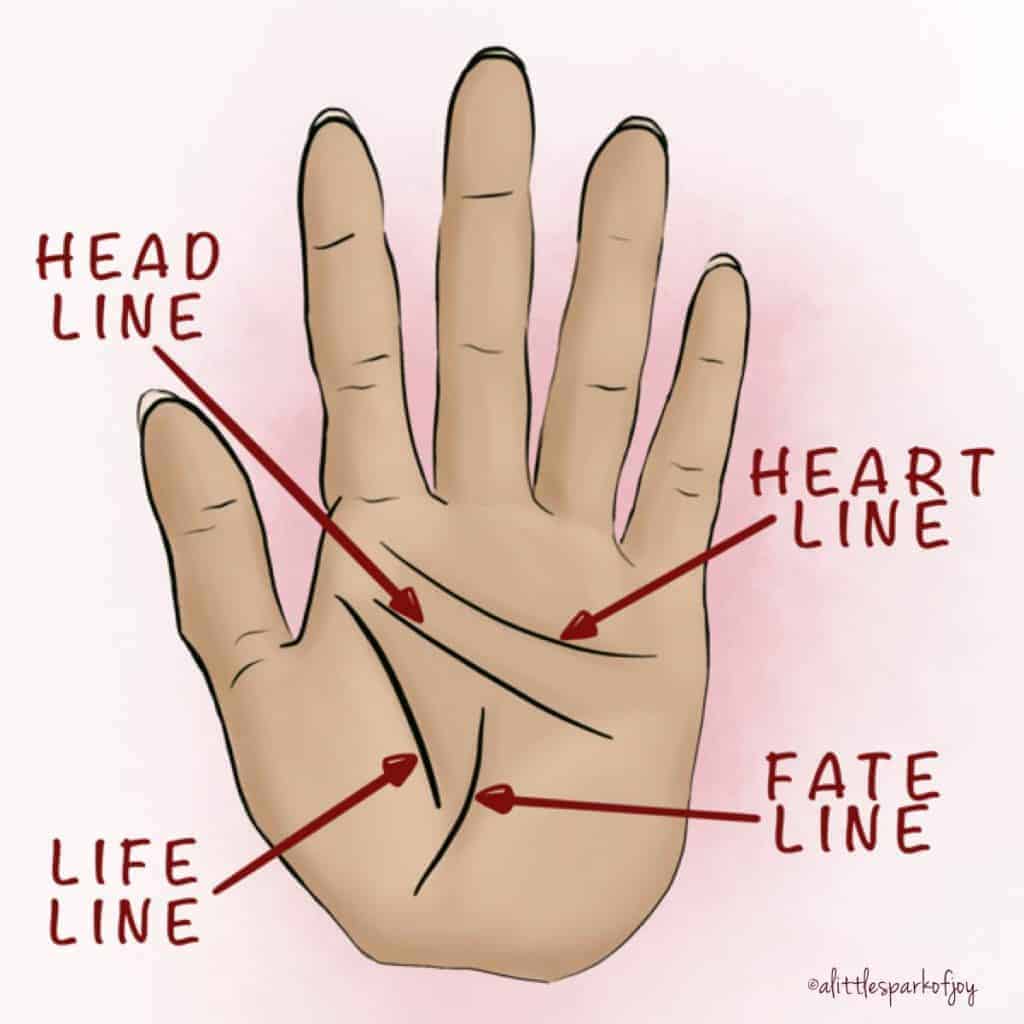
While palmistry can get super detailed, here are a few of the major features commonly explored:
♡ Heart Line: Reflects emotional depth, relationships, and how you give/receive love
♡ Head Line: Represents your mental energy, learning style, and communication
♡ Life Line: Often misunderstood as a timeline of how long you’ll live- it’s more about vitality, physical energy, and overall approach to life
♡ Fate Line (if present): Tied to career, destiny, and life’s deeper calling
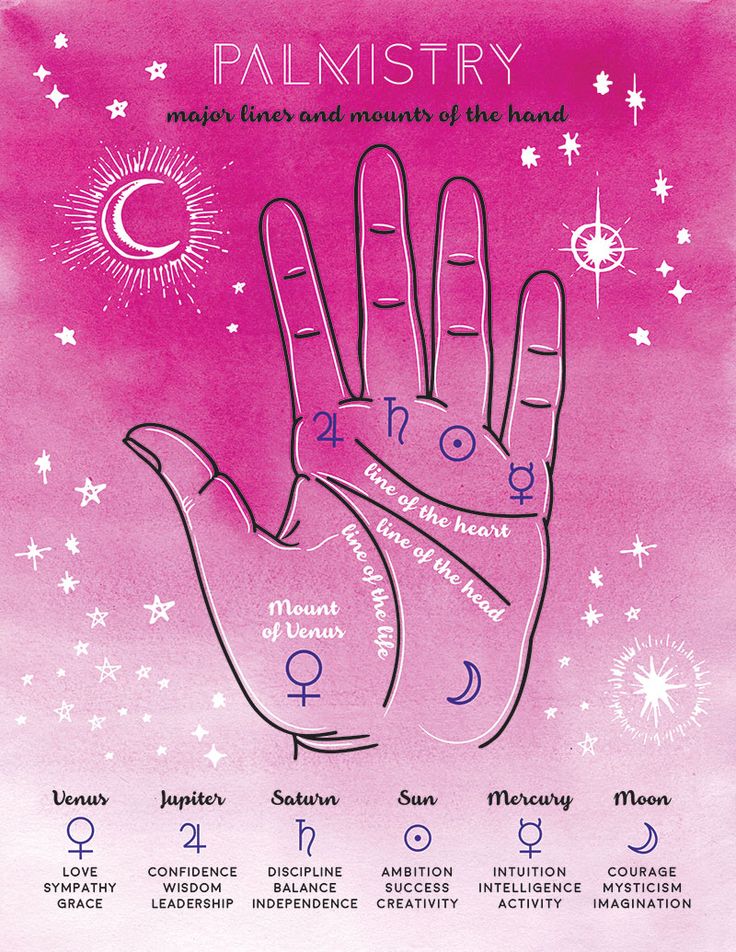
You also have “mounts” (the fleshy areas under each finger) that correspond to different planetary energies, like Venus (love), Jupiter (ambition), or Mercury (communication)
Left vs. Right Hand
♡ Dominant Hand: Often shows how you’re expressing your path in this lifetime
♡ Non-Dominant Hand: May reflect your potential, inherited traits, or the energetic blueprint you came in with.
Some readers view one hand as “what is” and the other as “what could be.”
Reading for Yourself
Palm Reading can feel more observational than intuitive at first, but it becomes a blend of both. As you study the lines and shapes, notice what stands out. How do certain areas feel to you? Are the lines deep or faint? Are they branching, curved, broken?
You don’t need to memorize everything. Start with curiosity, and let your hands speak for themselves.
Your hands are a part of your physical intuition. Just like body testing, palmistry reminds us that the body knows. Sometimes, it even remembers before the mind does.
Other Tools of Divination
Ancient Practices, Timeless Wisdom
While oracle cards and pendulums are some of the most accessible tools today, many forms of divination have deep roots in ancient cultures. These methods may feel more mystical or “old world,” but at their core, they’re simply different ways of accessing the same thing: your intuition.
Here are a few lesser-known but powerful tools to explore:
♡ Runes:
Rooted in Norse tradition, runes are symbols from ancient alphabets carved onto stones, wood, or bone. Each rune holds a specific meaning or energy. They can be pulled like cards for insight or cast together and interpreted based on their position and relationship to one another.
♡ Scrying (Water, Mirror, Flame Gazing):
Scrying is the art of gazing into a reflective or flickering surface to receive intuitive messages. This could be a bowl of water, a candle flame, or a black mirror. You’re not looking for literal images but rather allowing your subconscious mind to bring forward impressions, feelings or symbols. It’s a deeply meditative form of divination.
♡ Tea Leaf Reading (Tasseography):
This practice involves drinking a cup of loose-leaf tea, then interpreting the patterns left at the bottom of the cup. Readers look for shapes, symbols, or arrangements and trust their intuition to decode the message. It’s a practice of slowing down and seeing the sacred in something as simple as a cup of tea.
♡ Dice & Charms
Sometimes called “casting lots” or “charm casting,” this practice involves tossing a set of symbolic items- dice, tiny charms, bones, or shells- onto a surface or cloth and interpreting where they land. Some people assign meanings to each object, while others use intention and placement to piece together the message. No two throws are the same, which makes it a very fluid and intuitive experience.
These practices may feel ancient, but they’re not outdated.
In fact, they invite you to slow down, engage your senses, and experience divination in a tactile, embodied way. Whether you’re casting runes, gazing into water, or interpreting the scatter of tiny symbols, the magic is never in the object- it’s in the moment of connection between you and the unseen.
Let yourself explore with curiosity. You might be surprised by what feels natural in your hands.
Final Reflections
Your Intuition, Your Way
Divination isn’t about doing things “right.” It’s about reconnecting with the quiet knowing that’s always been within you. The tools- whether, cards, pendulums, your body, or symbols in tea leaves- are just pathways. Mirrors. Invitations to listen a little more closely to your own truth.
You don’t need a spiritual title or perfect clarity to begin. You don’t need to wait until you’re “ready.”
You’re already intuitive.
You’re already connected.
Try what calls to you. Let go of what doesn’t. Maybe you’ll find deep resonance with oracle cards. Maybe it’s the way your body sways when you ask a question. Maybe you’ll fall in love with the flicker of candle flame or the feel of runes in your hand.
There’s no one way to practice. There’s only your way.
So explore. Experiment. Be curious. Be open. And most of all- be kind to yourself as you learn to trust your inner guidance.
This isn’t about predicting the future. It’s about creating space for deeper connection- with yourself, with the present moment, and with the unseen wisdom that gently surrounds you.
And remember- whatever tool you’re using, approach it with curiosity, respect, and openness. Let your intention be clear, your energy grounded and your heart receptive.
Thank you for being here and on this journey with me. I hope you found this post to be useful and supportive to your path.
In our next post, we’re going to dive into another kind of divination that happens in the everyday- through numbers, animals, dreams, and signs.
But for now, I would love to hear from you! What is your favorite tool to work with? Drop a comment or reach out.
Blessings!


Leave a Reply