
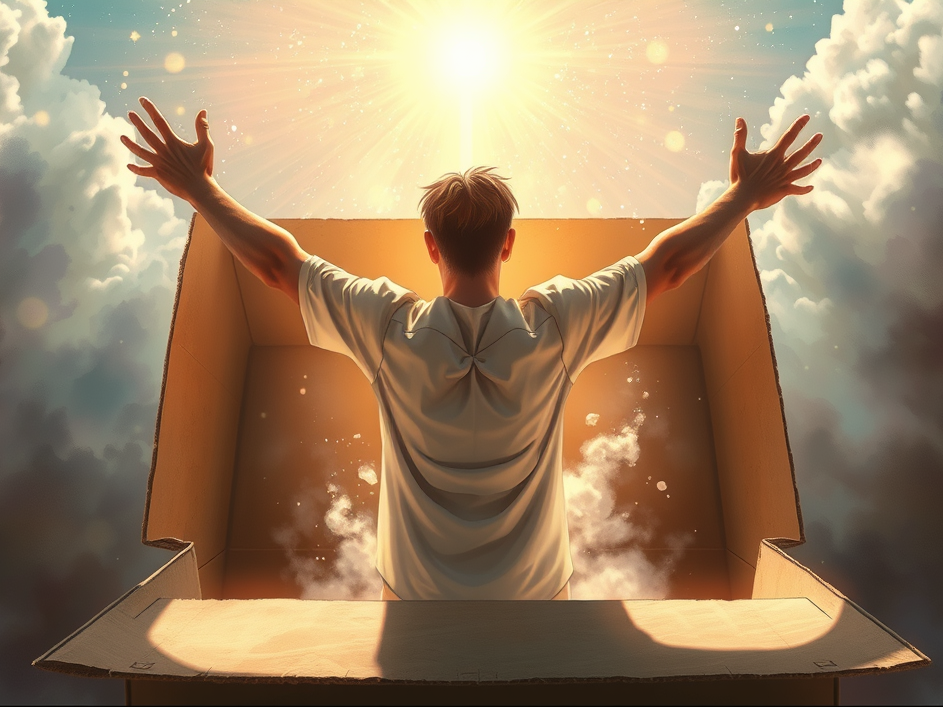
Spirituality is often seen as a path. But what if it was more like a sky?
Vast. Open. Infinite.
No two souls drift the same way across it, and that’s exactly as it should be.
We are all seekers- even if you don’t identify with a spiritual path.
Each of us feeling our way through what calls to us, and releasing what doesn’t.
Yet somewhere along the journey, we get this impression that there is a “right” way to be spiritual. But there is no single truth, no one map.
Only the way that feels like home to you.
Spirituality isn’t a checklist. It’s a remembering. A returning.
And not everything is meant for everyone.
- The Spiritual Mold
- The Problem with Gatekeeping
- Holistic Healing vs. Spirituality
- Religion vs. Spirituality
- Religious Fears
- Witchcraft vs. Spirituality
- Bringing It All Together
The Spiritual Mold
Spirituality Isn’t One Size Fits All
Many people hesitate to explore spirituality because they think it has to look a certain way. Maybe they assume it’s all about crystals, astrology, and horoscopes. Or they picture meditation, chanting, and praising Buddha. Some even associate it with Ouija boards and magic.
So, can spirituality include all of those things?
Absolutely.
Can spirituality include none of those things?
Absolutely.
The beauty of a spiritual journey is that it’s open, ever evolving, and deeply personal. At its core, spirituality is about healing, growing and becoming the most aligned version of yourself. If that includes religion, it includes religion. If it includes crystals, it includes crystals. But these things are just branches- not the roots. Our spiritual foundation is built on something deeper.
And here’s where many of us get stuck: what happens when our interests change?
Maybe you once connected deeply with crystals, but now they don’t resonate in the same way. Or perhaps you started your journey with tarot, but you feel drawn in a different direction now. Does that mean you’re no longer “spiritual”?
I’ve asked myself this question more times than I can count:
Am I even spiritual enough?
What does that even mean?
Where did we get this idea that spirituality has to fit into a mold?
Growth doesn’t mean you’ve outgrown spirituality. It might mean you’re growing into it.
Picture this:
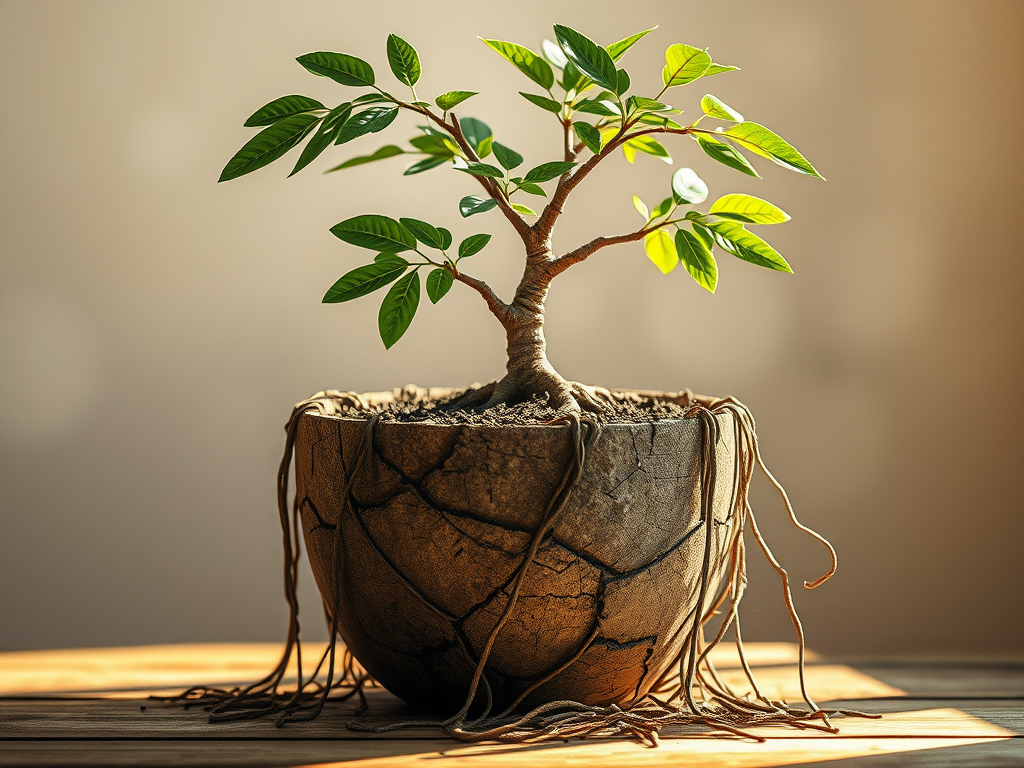
Is this plant failing because it no longer fits? Is it no longer worthy of the pot because it’s uncomfortable?
No.
It simply needs more space to expand- to keep growing and thriving.
The same is true for us. If reading tarot or crystals helped you start your spiritual journey but no longer feel aligned, that doesn’t mean you’ve lost your spirituality. It means you’re entering a new season of life, turning to a new chapter. Sometimes, we hold onto an old version of ourselves instead of allowing space for who we are becoming.
Spirituality is what you make it. Maybe you’re more drawn to holistic healing- herbs and natural medicine- than to energy work or rituals. That’s okay too.
There is no right or wrong way to walk this path. Only your way.
The Problem with Gatekeeping
For a path that’s meant to be about openness and self-discovery, spirituality still has its fair share of gatekeepers.
Some people treat it like there’s a right way and a wrong way to walk the path. You might hear things like:
♡ “You have to meditate every day.”
♡ “You have to believe in astrology.”
♡ “If you use tarot, you’re inviting negative energy.”
But as we’ve said before, spirituality is personal. There are no set checklists, no ultimate rulebook, and no one else gets to decide if you’re “spiritual enough.”
To be honest, the deeper I went into my own practice, the more I noticed judgment creeping in- especially when I saw people wearing crystals without knowing what they were. I’d think, how can they call themselves spiritual if they don’t even understand what they’re wearing?
But then I caught myself. The point isn’t to never have judgmental thoughts- we all do. The point is to recognize them and grow from them.
If that crystal makes someone feel good, who am I to say anything about it?
Gatekeeping doesn’t protect spirituality, it limits it. And maybe, deep down, other people’s growth feels uncomfortable to those who aren’t ready to step outside of their comfort zones. But spirituality isn’t about confinement. It’s about expansion.
Holistic Healing vs. Spirituality
Different, but Connected
Spirituality is often associated with things like meditation, energy work, and connecting with the unseen.
But what about holistic healing?
Many people assume the two go hand in hand- but the truth is, they don’t have to.
Holistic healing focuses on treating the whole person- mind, body and spirit- rather than just addressing symptoms. It includes practices like herbal medicine, acupuncture, nutrition, and alternative therapies that support overall well-being. Some people view these methods as purely physical, while others see them as deeply spiritual.
So, does holistic healing have to be spiritual?
No.
Can it be?
Absolutely.
For some, herbs or energy healing is simply about improving health. For others, it’s a way to connect with nature, divine energy, or universal wisdom. The difference lies in personal perspective, not the practice itself.
What’s important to remember is this:
Just like spirituality, holistic healing is personal.
You can be deeply spiritual without using herbs or alternative medicine, just as you can embrace holistic health without tying it to a spiritual path. There’s no rule that says the two must be linked- they simply can be, if that’s what feels right for you.
They key takeaway?
Both spirituality and holistic healing are spectrums.
You don’t have to do everything.
You don’t have to believe in everything.
You get to choose what aligns with you.
And just like spirituality and holistic healing can overlap without being dependent on one another, the same is true for religion and spirituality.
Some people assume you must be religious to be spiritual- or that being spiritual means rejecting religion entirely. But spirituality, by nature, isn’t confined to either path. It flows between them, beyond them, or alongside them. Wherever it leads you- that’s enough.
Religion vs. Spirituality
One Path, Many Perspectives
Spirituality and religion are often seen as separate. Religion typically follows structured beliefs, traditions, and teachings about a higher power. Spirituality is more fluid- centered on personal experience, self-discovery, and a connection to something greater (whatever that may be).
Some people are deeply religious and deeply spiritual. Others embrace spirituality without subscribing to any religion or belief at all. Both paths are valid- neither is superior to the other.
Take Alan Watts, for example. He explored Eastern philosophy extensively and believed in a form of divine intelligence, yet he was never confined to a single religious doctrine.
On the other hand, many Buddhist monks don’t believe in a God at all. Buddhism, though often seen as a religion, is more of a philosophy:
A way of living that emphasizes mindfulness, compassion, and enlightenment, rather than worshiping a deity.
So, can you be spiritual without being religious?
Yes.
Can you be religious and still embrace spirituality?
Absolutely.
Spirituality is about connection- to God, the universe, nature, your own higher self- whatever speaks to you.
For some, religion provides a strong foundation for their spiritual growth.
For others, meaning is found outside of organized faith.
What matters is that you follow a path that resonates with you. Whether that includes prayer, meditation, herbs, energy work, or none of the above, spirituality is about your experience- not a predefined set of rules.
So if spirituality isn’t about rejecting religion… why do so many religious traditions warn against it?
Why does exploring outside of structured faith feel like stepping into forbidden territory for some?
This fear isn’t new- it’s deeply rooted in history, tradition, and often, misunderstanding.
Religious Fears
Exploring Fear, History, and Misunderstanding
For many, the hesitation to explore spirituality comes from deeply ingrained beliefs- passed down through generations, reinforced by religious teachings, and shaped by cultural fears.
Practices like meditation, energy work or divination are often misunderstood- labeled as dangerous, deceptive or even evil.
Throughout history, anything outside the boundaries of organized faith was often viewed as heretical or threatening.
And yet, many spiritual practices dismissed as “wrong” actually share striking similarities with religious traditions.
♡ Meditation vs. Prayer:
Mediation is often seen as a secular or mystical practice, yet prayer is a deeply meditative act. Both involve stillness, introspection, and seeking connection with something greater.
♡ Energy Healing vs. Laying on of Hands:
Reiki, acupuncture, and other holistic healing methods are sometimes called “new age.”
But many religions have healing traditions where hands are placed on others to transfer divine energy.
♡ Divination vs. Seeking Guidance:
Many religious figures received visions, signs, or prophetic dreams. Yet today, tools like tarot or astrology are often viewed as forbidden. More often than not, the difference is often perspective, not the act itself.
Fear vs. Exploration
Religious fear of spirituality often stems from the idea that stepping outside structured belief systems will lead you astray. But what if, instead of leading us away, exploring spirituality brings us closer?
Closer to ourselves.
Closer to understanding.
And maybe, even closer to faith.
Spirituality doesn’t have to replace religion. For some, it enhances it. For others, it offers freedom outside of dogma.
The key is realizing that curiosity isn’t dangerous- it’s natural.
When we allow ourselves to ask questions, explore new ideas, and expand our perspectives, we may find that spirituality doesn’t take us away from truth- it leads us to a greater understanding of it.
Personally, much of the religious fear I’ve experienced wasn’t my own- it was placed on me by others. In their eyes, I’m going to h*ll. And honestly? That’s an incredibly heavy weight to carry. The fear of disappointing loved ones simply for following a path they don’t understand is something many of us silently hold.
I recognize that their beliefs teach them that certain things are “wrong” or “dangerous.”
But here’s where I’ve always felt an imbalance:
If their religion shames me- while my spirituality embraces them, then where is the fairness in that?
But that’s exactly why we’re here.
Not everything is for everyone. And that’s okay. At the end of the day, every path is valid. We just can’t allow fear- or the fear of others- to stop us from living in our truth.
Because in my eyes,
It’s not about rigid rules or fear.
It’s about love.
And few paths have been more feared- or more misunderstood- than witchcraft.
Witchcraft vs. Spirituality
Clearing the Confusion
Spirituality and witchcraft are often lumped together, but they are not the same thing.
While they can overlap, one does not require the other.
♡ Spirituality is a broad, personal journey that focuses on self-discovery, healing, and connection- whether to the universe, nature, energy or something greater.
♡ Witchcraft is a practice that involves intention-setting, spell work, herbalism, and working with energy in a more direct and often ritualistic way.
Some witches are deeply spiritual. Others are atheist.
Some spiritual people practice magic, while others don’t.
Yet, because of historical fear and misunderstanding, witchcraft is often painted as something dark or dangerous. In reality, it’s simply a practice- one that varies greatly between cultures, lineages, and individuals.
Just as spirituality isn’t one-size-fits-all, neither is witchcraft.
Can you be spiritual without practicing witchcraft?
Absolutely.
Many people explore in spirituality through mediation, energy work, or shadow work- without ever casting a spell or working with the elements.
Spirituality is a journey of the soul, while witchcraft is a set of tools and practices. As we said earlier, these are just branches of interest- not the roots.
Can you be a witch without being spiritual?
Yes.
Some witches approach their craft purely as a means of personal empowerment, manifestation, or herbalism without tying it to spiritual beliefs.
At the end of the day, these paths are unique and personal. Whether you practice one, both, or neither- whether you’re religious, spiritual, curious or simply exploring- that’s okay.
Bringing It All Together
Your Path, Your Choice
Spirituality isn’t a box.
It isn’t a rulebook.
It isn’t a one-size-fits-all journey.
Some people find meaning in holistic healing, while others don’t.
Some embrace spirituality alongside religion, while others walk a path outside of structured faith.
The truth is, there is no right or wrong way to be spiritual. Only what feels aligned for you.
We are constantly growing, evolving, and shifting. What resonates with you today may not resonate a year from now, and that’s okay.
Just like the plant outgrowing its pot, you are meant to expand beyond old beliefs, expectations and limitations.
The key is to walk your path without fear- without fear of judgement, without fear of not being “enough,” and without fear of disappointing others. This journey is yours, and it doesn’t need to look like anyone else’s.
What if spirituality isn’t about what you believe, but about how you experience life?
So, whether you connect with tarot, meditation, holistic health, spells, religious teachings, or none of the above- your path is valid.
And it always will be.
Thank you for being here on this journey with me.
I would love to hear from you! Have you ever been held back from embracing your spiritual path for any reason? Drop a comment or reach out!
Blessings, Friends!
 Divine Events
Leave a comment